Soft Washingfor Cheshire & the North WestLow pressure. Correct chemistry. No damage.
Algae, mould and organic staining removed from render, brick, cladding and delicate substrates at a fraction of the pressure: killing the growth at the root so the elevation stays clean for years rather than weeks.
Fully insured, DBS checked, eco-friendly products, and every elevation photographed before and after.
What soft washing actually involves
Soft washing is a low-pressure cleaning method that does the work with chemistry and dwell time rather than force. Instead of blasting growth off a surface, a biocidal solution is applied at roughly garden-hose pressure, allowed to work, and then gently rinsed: killing algae, mould, lichen and bacteria at the root.
That distinction matters because most exterior discolouration is biological, not dirt. Pressure washing removes what is visible and leaves the root structure intact, which is why blasted render is green again within a season. Soft washing removes the organism, so results typically last several times longer.
It is the correct method for anything porous, coated, painted or fragile: K-Rend and silicone render, brick, painted masonry, timber and composite cladding, uPVC, fascias and soffits, conservatory roofs and garden structures.
Why professional work matters here
Soft washing is not simply 'lower pressure'. It depends on correct product selection, correct dilution, correct dwell time and correct rinse sequence, and on protecting planting, glass and adjacent surfaces while it works. Get the dilution wrong and you either achieve nothing or bleach a substrate permanently. It is a technical method, not a gentler version of a pressure wash.
Who this is for
-
Owners of rendered homes
Modern K-Rend and silicone-rendered properties across Cheshire where algae streaking spoils an otherwise flawless elevation.
-
Period and brick properties
Where jetting would damage soft mortar joints and historic brick faces.
-
Anyone with painted or coated surfaces
Painted masonry, cladding and coatings that pressure washing would strip or lift.
-
Commercial premises and managed estates
Hotels, care homes, apartment blocks and offices needing whole-elevation cleaning without risking the building fabric.
When it is needed
- Green, black or red algae streaking down an elevation
- Mould or dark patches on north-facing or shaded walls
- Render, cladding or brick looking dull, patchy or streaked below windowsills
- uPVC, fascias, soffits and gutters going grey or green
- A previous pressure wash that came back green within months
- Any surface where you are unsure whether jetting is safe, the default answer is soft washing
The cost of leaving it another season.
Organic growth on a building is a moisture indicator. Ignoring it means ignoring the water sitting on your building fabric.
Growth holds water against the wall
Algae and moss mats keep the substrate damp. On render and masonry, persistent damp leads to frost damage, cracking and eventually delamination.
Render fails from the surface in
Once render cracks, water enters behind it. Patch repairs never quite match, and full re-render is one of the most expensive exterior jobs there is.
Coatings and paint break down
Biological growth degrades paint films and coatings, shortening redecoration cycles considerably.
Pressure washing makes it worse
Jetting drives water into porous substrates and behind render, and leaves the root system alive, so the elevation regreens faster than before.
Property value visibly drops
A streaked, green elevation reads as neglect to buyers and valuers regardless of the condition of everything behind it.
Common mistakes we're called in to fix
- Pressure washing render or painted masonry, which forces water in and can crack or strip the surface
- Using household bleach at uncontrolled strength, killing planting and bleaching the substrate unevenly
- Rinsing growth off without any biocide, guaranteeing rapid regrowth
- Cleaning the walls and ignoring the roof and gutters above, so the elevation restreaks with the next rainfall
- Assuming stronger equals better, over-concentrated product damages substrates permanently
Soft washing costs a fraction of re-rendering or repainting. It is the cheapest form of building fabric protection available.
Five steps, agreed before we start.
Substrate assessment & fixed quote
We identify the substrate, coating, growth type and any existing damage, then issue fixed, itemised pricing before work is booked.
Protection & preparation
Planting, glazing, paving, lighting and neighbouring surfaces protected. Access planned so full elevations are treated evenly, top to bottom.
Low-pressure biocide application
Correctly diluted solution applied at low pressure across the whole elevation, with additional treatment on heavily colonised areas.
Dwell & controlled rinse
Product left to kill the growth at the root, then gently rinsed. Dwell time is the active ingredient: rushing this stage is why other cleans fail.
Verification & aftercare
Walk-round with you, before-and-after photographs, and honest advice on what is driving growth on your building, usually drainage, shade or overhanging trees.
Specific outcomes, not vague promises.
Results that last
Killing the organism rather than rinsing it typically gives years of clear elevation, not months.
Zero pressure damage
No water forced behind render, no stripped coatings, no eroded mortar joints, no cracked seals.
Safe on everything porous
Render, brick, painted masonry, cladding, uPVC, timber and composite all handled with the same low-pressure approach.
Whole-elevation consistency
Even coverage from eaves to ground rather than a patchwork of clean and dirty areas.
Protects building fabric
Removing moisture-holding growth slows frost damage and extends coating and render life.
Planting protected
Eco-friendly products, controlled application and full protection of beds and borders as standard.
Materials, methods and where each applies.
Surfaces suited to soft washing
If it is porous, coated, painted or fragile, soft washing is the correct method.
- K-Rend, silicone and monocouche render
- Traditional sand-and-cement render and pebbledash
- Brick and stone masonry, including soft-mortar period properties
- Painted and coated masonry
- Timber, composite and metal cladding systems
- uPVC, fascias, soffits, bargeboards and gutter exteriors
- Conservatory roofs, canopies, garden rooms and fencing
- Roof coverings where jetting would strip the tile surface
Soft washing versus pressure washing
They are complementary methods for different problems, and the skill is in choosing correctly. Pressure washing suits hard, dense, horizontal surfaces: driveways, forecourts, concrete, setts, where the issue is ingrained dirt. Soft washing suits vertical, porous and coated surfaces where the issue is living growth. Using pressure on render risks water ingress and cracking; using soft washing on a heavily oiled driveway simply will not shift it. We carry both systems on the van, which is why we can pick the right one for each surface on the same property.
The chemistry, and why dwell time matters
Soft wash solutions are biocidal: they kill algae, mould, lichen and bacteria at cellular level. The active work happens during dwell, not during application, which is why a rushed job that is applied and immediately rinsed underperforms so badly. Dilution is matched to substrate and growth severity: strong enough to be effective, controlled enough to be safe on the surface and surrounding planting.
Variations of the service
Soft washing is applied across several distinct jobs on premium properties.
- Full house wash: every elevation treated for a consistent finish
- Render and cladding cleaning: the most common request on modern Cheshire homes
- uPVC, fascia, soffit and gutter exterior cleaning, usually combined with roof work
- Roof soft washing where the covering cannot tolerate pressure
- Conservatory, orangery and garden room cleaning
- Wall, fence, gate and garden structure treatment
- Commercial elevation cleaning on hotels, care homes and apartment blocks
Residential versus commercial soft washing
Domestic soft washing is typically a full house wash completed in a single visit. Commercial work across Greater Manchester and the North West is scheduled around occupancy, often on a planned maintenance cycle, and covers larger elevations, access considerations and coordination with roof and gutter clearance so the whole building is dealt with in one mobilisation.
Where we work
Based in Cheshire, covering the whole North West. See the full service areas and coverage map , or get in touch to check your postcode.
- Wilmslow
- Alderley Edge
- Prestbury
- Knutsford
- Hale
- Bowdon
- Lymm
- Tarporley
- Mobberley
Soft Washing, straight answers.
What is soft washing and how is it different from pressure washing?
Soft washing applies a biocidal solution at very low pressure and lets it kill the growth at the root, then rinses gently. Pressure washing uses force to remove what is visible. On render, brick, cladding and painted surfaces, soft washing is both safer and much longer-lasting.
How much does soft washing cost?
It depends on the number of elevations, height, access, substrate and growth severity. You receive fixed, itemised pricing before booking, and it does not change on the day.
How long do soft washing results last?
Typically several years, because the organism is killed rather than rinsed off. Shaded, tree-covered and north-facing elevations regreen sooner than open, sunlit ones.
Is soft washing safe for my render?
Yes: it is the recommended method for K-Rend, silicone and traditional render precisely because it avoids the water ingress and cracking risk that pressure washing creates.
Will it harm my plants, lawn or pets?
We use eco-friendly products, protect beds, borders and paving before starting, and control rinse-down. Keep pets indoors during application and the treated area is fine once rinsed and dry.
How long does a full house soft wash take?
Most domestic properties are completed in a single visit. Larger homes, difficult access or combined roof and gutter work may extend this, and that is confirmed at quotation.
Can you soft wash uPVC, fascias, soffits and gutters?
Yes, and it is usually most efficient to do them at the same visit as the walls or roof, since the access is already set up.
My walls were pressure washed and went green again quickly. Why?
Because pressure removed the visible growth but left the root system alive. Soft washing addresses that directly, which is why the interval between cleans is so much longer.
Do you offer this for commercial buildings?
Yes: hotels, care homes, apartment blocks, offices and retail units across Cheshire, Greater Manchester and the wider North West, scheduled around occupancy.
Are you insured for work at height on elevations?
Yes. We are fully insured for residential and commercial work and DBS checked, and we use appropriate access equipment for the elevation being treated.
Related services
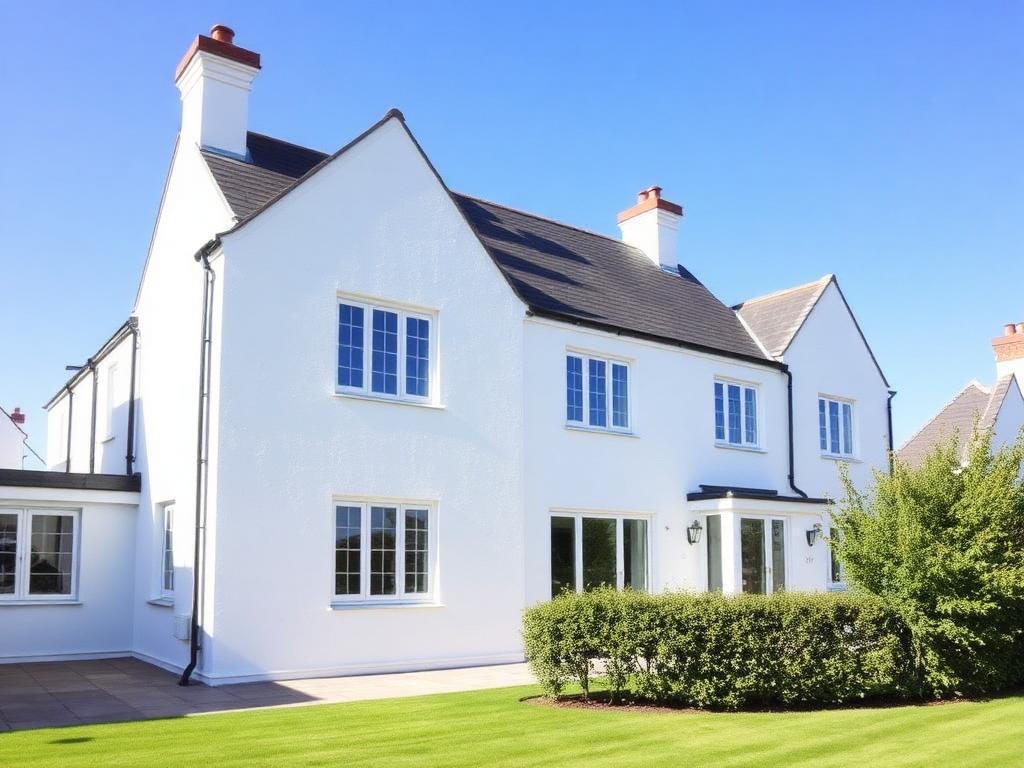
Render Cleaning
Green streaking, black staining and algae removed from K-Rend, silicone and monocouche render by soft washing: no pressure forced into the substrate, no patchwork finish, and a result that holds for years rather than a season.
View service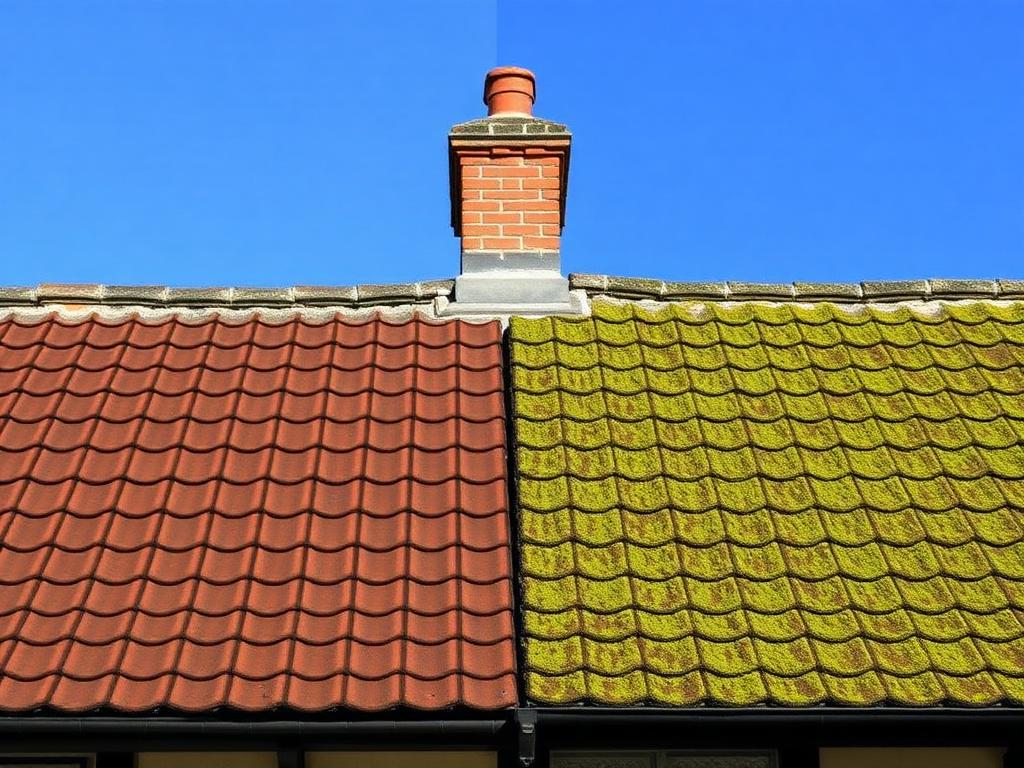
Roof Moss Removal
Moss, algae and lichen removed from tiles and slates without walking a fragile roof unnecessarily: gutters and valleys cleared of the debris that causes overflow, damp and repair bills, with fixed pricing agreed before we arrive.
View service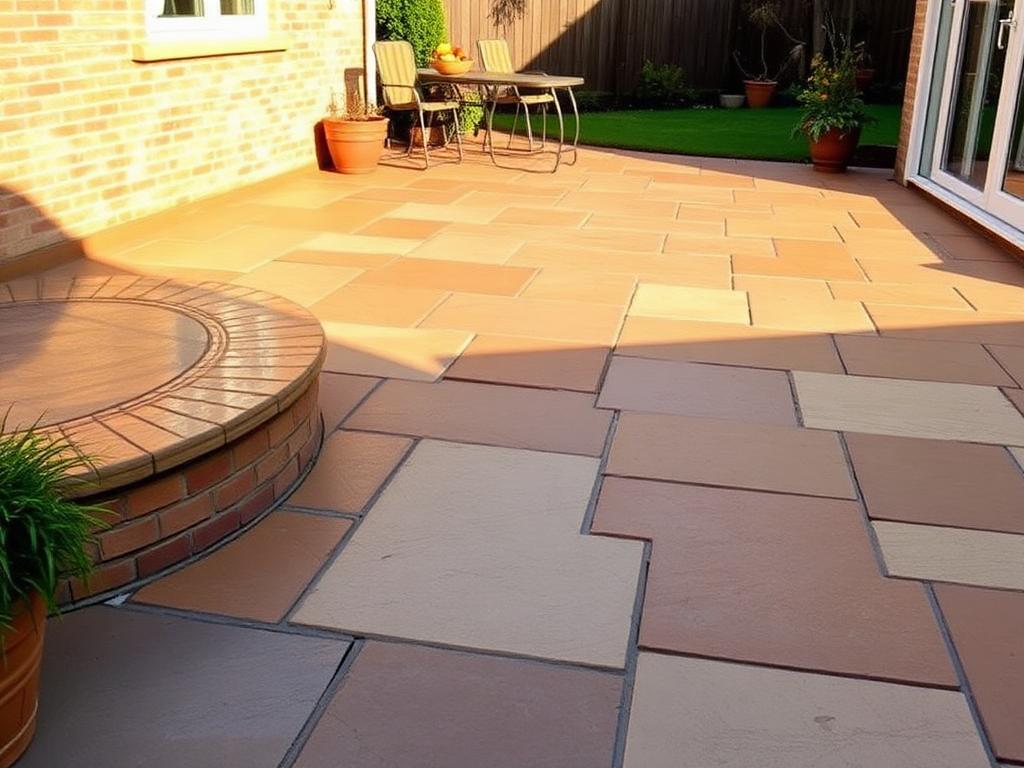
Patio & Indian Sandstone Cleaning
Black spot, algae and weathering removed from natural stone without bruising the surface or blowing out the pointing, so the patio you entertain on looks like the one you chose in the showroom, with fixed pricing agreed up front.
View serviceBack to the homepage for our full range of exterior cleaning services across Cheshire and the North West.
Clean the building without damaging the building.
Send photographs of the affected elevations and we will return fixed, itemised pricing and a straight answer on how long the result will hold.
- Fully insured & DBS checked
- Fixed, itemised pricing
- Before-and-after photos every job