
Indian Sandstone Restorationacross Wilmslow & CheshireColour brought back, stone left intact.
The riven buff, grey and raj green you originally chose is still under the black spot and algae: recovered with controlled heat, correct chemistry and no aggressive jetting, at a fixed price agreed before we arrive.
Fully insured, DBS checked, and every job photographed before and after.
What indian sandstone restoration actually involves
Indian sandstone is a porous sedimentary stone. That porosity is what gives it depth of colour and grip underfoot, and it is also why it stains, greens and develops black spot faster than engineered paving. Restoration is not simply washing it; it is removing biological growth from inside the pore structure, treating lichen at root level, correcting the tonal patchiness that develops with age, and then deciding honestly whether sealing is appropriate for that particular patio.
We work with a van-mounted hot-water system at up to 120°C, combined with rotary surface cleaning at reduced pressure and hand-detailing along riven edges and pointing. Heat does the work that pressure would otherwise be asked to do, which matters enormously on a stone that scars, pits and delaminates when it is over-jetted.
The finished result should read as the original stone on the day it was laid: even tone across the whole terrace, defined joints, clean edges, and no bleached patches or wand striping across the riven face.
Why professional work matters here
Indian sandstone punishes mistakes. Too much pressure and the riven surface pits, the softer laminations lift and the flag never looks right again. Too much bleach and the stone bleaches unevenly, leaving pale ghosting that no amount of subsequent cleaning corrects. Too little heat and the black spot survives to regrow within weeks. Professional restoration controls temperature, pressure, chemistry and dwell time together, and knows when the honest answer is that a flag needs replacing rather than cleaning.
Who this is for
-
Premium homes with large stone terraces
Riven and sawn Indian sandstone patios across Wilmslow, Alderley Edge, Prestbury, Knutsford, Hale and Bowdon that have dulled over five to ten seasons.
-
Patios covered in black spot lichen
The stubborn black discs that ordinary washing will not touch and that domestic machines simply polish around.
-
Owners preparing to sell or entertain
A restored terrace changes both the photographs of a property and the experience of standing on it.
-
Recently laid stone with cement haze
Laying residue, jointing compound smears and early algae removed before they become permanent.
When it is needed
- Black spot lichen appearing as small hard black discs across the surface
- Green algae film, particularly on shaded and north-facing sections
- The original buff, grey or raj colour looking flat, grey and lifeless
- Rust-coloured or orange staining bleeding out of the stone itself
- Pointing crumbling, cracking or washing out between flags
- Before a summer of entertaining, or ahead of a valuation or sale
The cost of leaving it another season.
Sandstone deteriorates slowly and then all at once. The biological growth holding moisture in the stone is the mechanism behind almost every problem that follows.
Black spot becomes permanent
Lichen etches into the stone as it feeds. Treated early it lifts cleanly; left for years it leaves shadowing behind even after the growth itself is killed.
Frost damage and delamination
Saturated stone that cannot dry out spalls and flakes through freeze-thaw cycling. Delaminated flags cannot be restored: only replaced.
The terrace becomes slippery
Wet algae on smooth-sawn sandstone is genuinely dangerous, particularly on steps and around a level threshold into the house.
Failing pointing lets water under the flags
Once the joints go, water tracks into the bedding, movement follows, and individual flags begin to rock and lip.
Staining sets into the pore structure
Barbecue grease, planter rust, leaf tannin and wine all migrate deeper the longer they sit in an unsealed, porous stone.
Common mistakes we're called in to fix
- Attacking black spot with a pencil-jet lance, which removes the top of the stone along with the lichen
- Neat household bleach, which bleaches the stone unevenly and kills adjacent planting
- Sealing over live algae or damp stone, permanently locking in staining and creating a milky surface
- Using patio cleaners containing acids on stone that reacts to them
- Assuming re-pointing is optional after a deep clean, when the clean often exposes joints that were already failing
Restoring a sandstone terrace is a maintenance cost. Relaying one in the same stone, assuming the batch is still available, is a landscaping project. The gap between those two figures is why timing matters.
Five steps, agreed before we start.
Inspection & fixed quote
We identify the stone, assess porosity, pointing condition, growth type and any existing damage, then issue itemised fixed pricing before booking. Flags beyond restoration are flagged honestly, not quietly cleaned around.
Preparation & protection
Furniture moved, planting, thresholds and adjacent surfaces protected, drainage routes planned so slurry never runs into borders or a neighbour's gully.
Controlled hot-water clean
Reduced-pressure rotary cleaning at up to 120°C across the field of the terrace, with hand-detailing on riven texture, joints, steps and edges.
Lichen treatment & rinse
Targeted biocide treatment of black spot and algae at root level, full neutralising rinse, and colour assessment across the whole terrace rather than section by section.
Reinstatement & handover
Joint repair or re-pointing advice, optional impregnating sealer once the stone is fully dry, walk-round, and before-and-after photographs.
Specific outcomes, not vague promises.
Original colour recovered
Buff, grey, raj and modak tones return because the growth is removed from within the pores, not skimmed off the top.
Black spot properly killed
Treated at root level so it does not reappear within a single season, which is the usual outcome of pressure alone.
Stone surface preserved
Heat-led technique means the riven face keeps its texture instead of being pitted or striped.
Safe underfoot again
Algae removal restores grip on steps, thresholds and sawn stone that becomes treacherous when wet.
Longer terrace life
Dry, clean, well-pointed stone resists frost damage: the single biggest cause of sandstone failure in the North West.
Documented result
Photographs before and after, and honest advice on whether sealing is worth it for your stone.
Materials, methods and where each applies.
Stone types and how each is treated
Indian sandstone arrives in several finishes, and each responds differently to heat, pressure and chemistry.
- Riven Indian sandstone: textured face traps growth; needs dwell time and detailing rather than pressure
- Sawn and honed sandstone: smoother, shows striping instantly, cleaned at lower pressure with wider fan
- Raj green and modak: mineral-rich and prone to iron bleed; treated to avoid drawing rust to the surface
- Kandla grey: shows algae and tonal patchiness most obviously, so even coverage matters more than anywhere
- Yorkstone and other natural sandstone: same principles, adjusted for a harder, less absorbent stone
Black spot lichen: why it is different
Black spot is not dirt. It is a lichen, a fungus and an alga living together; that bonds physically into the stone and produces acids as it grows. Pressure alone shears the top off and leaves the anchoring structure behind, which is why it returns so quickly after a DIY clean. Correct treatment combines heat, a lichen-specific biocide and dwell time, and on badly affected terraces it is treated as a two-stage process rather than promised as a single miracle pass.
Pointing, jointing and re-sanding
Cleaning frequently exposes pointing that has been failing quietly for years. We report what we find and advise on the correct jointing product for the terrace: brush-in resin compounds for wide, sound joints, or traditional mortar re-pointing where movement and joint width demand it. On flags laid with a sand joint, kiln-dried sand is replaced and settled.
Sealing: when it helps and when it does not
An impregnating sealer reduces absorption, slows staining and makes future cleaning easier. It is worth doing on dining terraces, around barbecues and on light-coloured stone. It is not a cure for existing staining, it cannot be applied to damp stone, and it should never go on before the growth is dead. We give you the honest answer for your terrace rather than selling sealing by default.
- Applied only when the stone is fully clean and fully dry
- Impregnating rather than film-forming, so the stone still breathes
- Typically re-applied every three to five seasons depending on exposure
- Never applied over live lichen, efflorescence or cement haze
Where we work
Based in Cheshire, covering the whole North West. See the full service areas and coverage map , or get in touch to check your postcode.
- Wilmslow
- Alderley Edge
- Prestbury
- Knutsford
- Hale
- Bowdon
- Lymm
- Tarporley
- Mobberley
Indian Sandstone Restoration, straight answers.
How much does Indian sandstone restoration cost?
Pricing depends on area, growth severity, jointing condition and whether sealing is included. Every quote is fixed and itemised per element before booking, so you can approve the clean alone or the clean plus jointing and sealing.
Can you remove black spot completely?
In the large majority of cases, yes: using heat plus a lichen-specific treatment at root level. On stone that has been left for many years, faint shadowing can remain where the lichen has etched the surface. We tell you what to expect at survey rather than after.
Will pressure washing damage my sandstone?
Badly applied pressure certainly will. We lead with heat and use reduced pressure through a rotary surface cleaner, which is why the finish is even and the riven texture survives.
How long does a typical patio take?
Most domestic terraces are completed in a single day. Larger terraces, heavy lichen or added re-pointing and sealing may run to a second visit, which is confirmed in the quote.
How long will the result last?
Typically two to four years before growth becomes noticeable again, depending on shade, tree cover and aspect. Sealed stone in an open, sunny position lasts longest; a shaded north-facing terrace under trees will need more frequent attention.
Should I have the patio sealed afterwards?
It helps on dining and barbecue terraces and on light stone, but it is optional and it is not a cure for existing stains. We only apply an impregnating sealer once the stone is clean and fully dry.
Do you re-point the joints as well?
We advise on jointing condition as standard and can quote re-pointing or a brush-in resin compound where the joints have failed. Cleaning often reveals pointing problems that were already there.
Will the cleaning harm my plants?
We use eco-friendly products, protect planting and beds before starting, and plan rinse routes so run-off is controlled rather than washed into borders.
Can you clean the steps, walls and coping too?
Yes, and it is usually worth doing in the same visit: cleaning the terrace and leaving green steps and coping around it never looks finished.
Which areas do you cover?
Based in Cheshire and covering the whole North West, with most sandstone work in Wilmslow, Alderley Edge, Prestbury, Knutsford, Hale, Bowdon, Lymm and Mobberley.
Related services
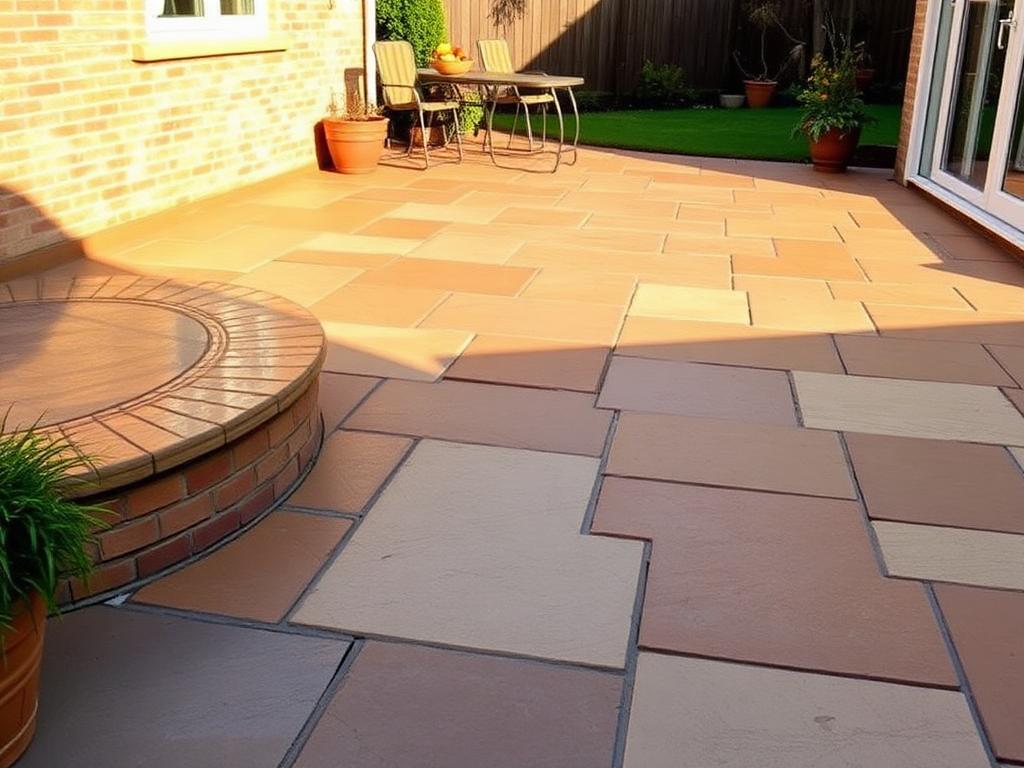
Patio & Indian Sandstone Cleaning
Black spot, algae and weathering removed from natural stone without bruising the surface or blowing out the pointing, so the patio you entertain on looks like the one you chose in the showroom, with fixed pricing agreed up front.
View service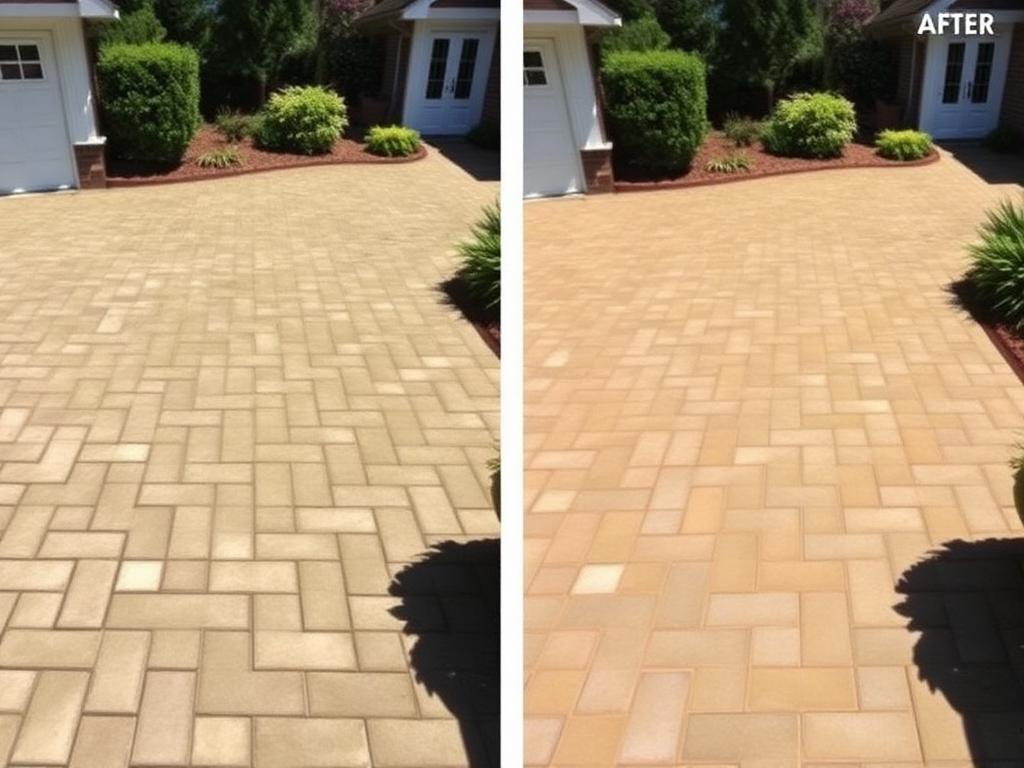
Block Paving Cleaning
Moss, weeds, algae and tyre shadowing removed from every joint and every block, then the joints refilled and vibrated in, because a clean that empties your paving of sand costs you more than it saves.
View service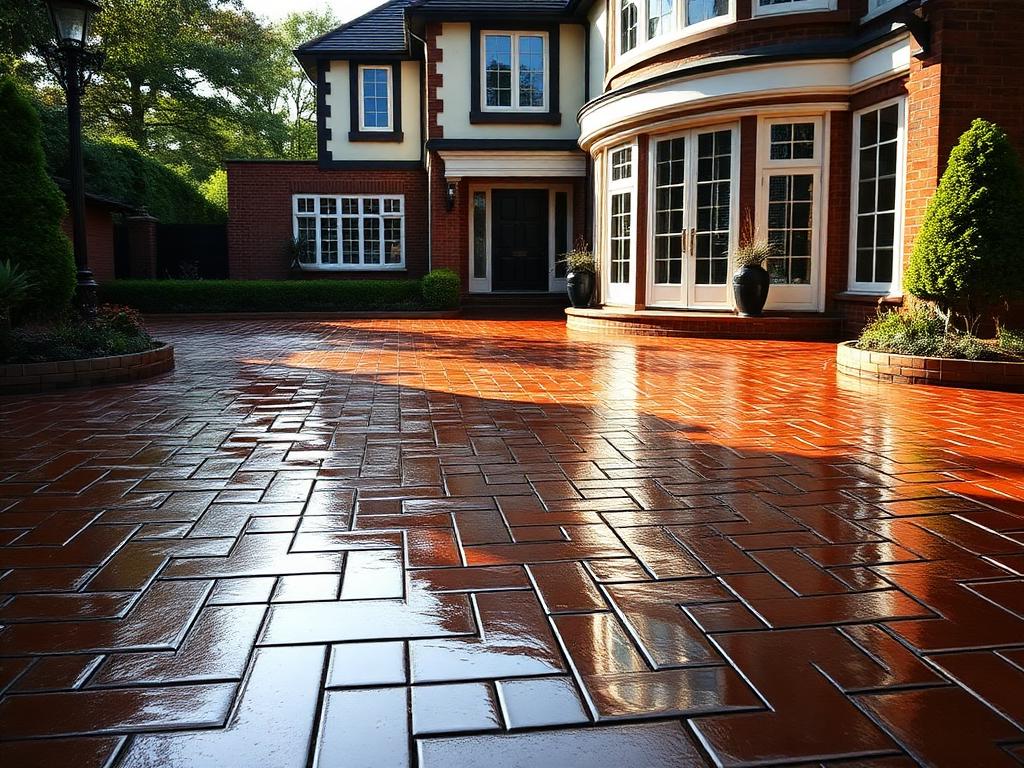
Re-sanding & Sealing
Joints refilled and compacted with the right sand for the surface, then, where it genuinely adds value: a breathable sealer that locks the joints, deepens colour and makes every future clean easier and cheaper.
View serviceBack to the homepage for our full range of exterior cleaning services across Cheshire and the North West.
See the stone you actually paid for.
Send a photograph or a postcode and we will assess the stone, quote a fixed itemised price, and tell you honestly what restoration will and will not recover.
- Fully insured & DBS checked
- Fixed, itemised pricing
- Before-and-after photos every job