Lytham & Lytham St Annes · Lancashire · FY8

Stone & paving cleaning in Lytham & Lytham St Annes

Stone and paving cleaning in Lytham & Lytham St Annes for York stone, flagstone, limestone, granite setts, cobbles and porcelain. Natural stone rewards a careful clean and punishes a careless one, so we survey the material before anything is switched on.

Coastal exposure means salt, sand and fast-returning green growth on render, roofs and seafront-facing elevations.

on quote

What stone & paving cleaning involves

Stone and paving cleaning is the careful cleaning of natural stone surfaces — sandstone, York stone, limestone, granite, slate and porcelain — where the material's porosity and hardness dictate the method.

Natural stone varies enormously. What is safe on granite can scar limestone, so pressure is kept low and chemistry appropriate to the stone does more of the work.

Stone & paving cleaning in Lytham & Lytham St Annes, Lancashire

Different stone wants different treatment: limestone and sandstone are porous and soft, granite and porcelain take more, and lime-based pointing on older Lancashire properties will wash straight out under an aggressive lance. We test an inconspicuous area, choose the pressure and chemistry from there, and re-point or re-sand as part of the work rather than as an afterthought. Sealing is available where you want the colour held and the surface easier to maintain — and we will tell you when a stone is better left unsealed. We are fully insured, we work tidily around occupied homes, and every Lytham & Lytham St Annes job is photographed before and after so you can see exactly what you paid for.
What's included

  • Material-specific method and pressure
  • Black spot lichen treatment
  • Re-pointing and re-sanding options
  • Sealing to keep it cleaner for longer
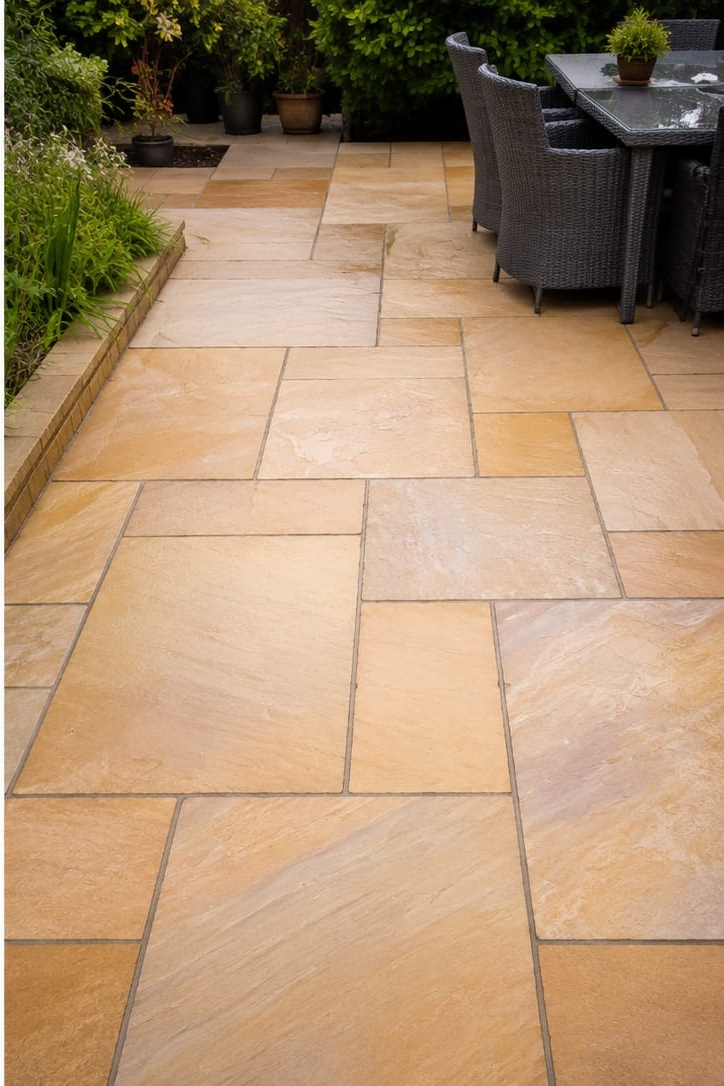
The same sandstone paving cleaned back to an even natural tan tone
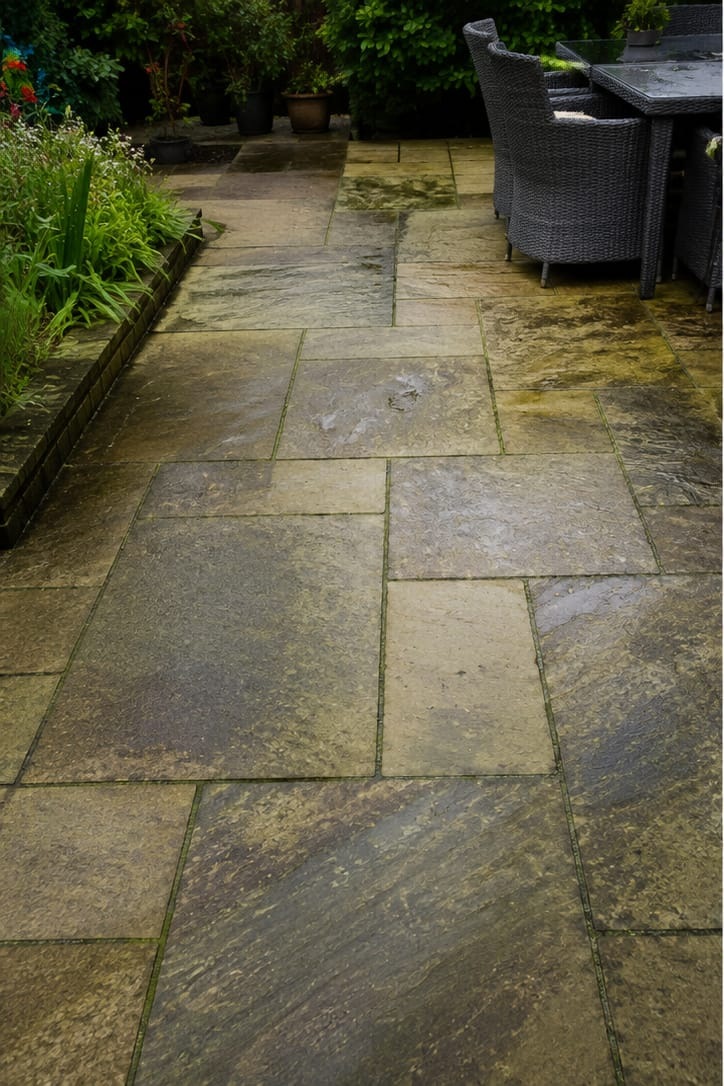
Sandstone paving slabs green with algae and ground-in soiling before cleaning
BeforeAfter
Riven sandstone paving — organic growth lifted and the natural colour of the stone brought back.

The process

How stone & paving cleaning runs in Lytham & Lytham St Annes

  1. 01

    Assessment

    We identify the stone, test its porosity where necessary and check joints, bedding and existing damage.

  2. 02

    Protection

    Planting, lawns, timber and adjacent finishes are protected and run-off is directed away.

  3. 03

    Pre-treatment where needed

    Lichen and black spot are treated and given dwell time rather than being forced off.

  4. 04

    Controlled cleaning

    Cleaning is carried out at the lowest effective pressure, with a test area first on unfamiliar or delicate stone.

  5. 05

    Rinse and clean-up

    The area is rinsed, joints checked and surroundings washed down.

  6. 06

    Inspection and aftercare

    We review the finish with you and advise on re-pointing, re-sanding or sealing where it would help.

Why homeowners in Lytham & Lytham St Annes book it

  • Brings out the natural colour and character of the stone
  • Removes lichen and black spot rather than lightening it temporarily
  • Protects the surface from the scarring a careless clean would cause
  • Highlights failed pointing before water gets into the bedding

Surfaces and properties it suits

  • Indian and York sandstone
  • Limestone, travertine and marble paving
  • Granite setts, slate and porcelain
  • Steps, thresholds, paths and stone terraces
  • Period and listed properties, where a cautious method matters most

How long it takes

Most stone areas are a half-day to a day. Delicate stone and heavy lichen take longer because the treatment has to be given time.

  • The size of the area and how much of it can be reached with a rotary head rather than by hand
  • Access — gates, steps, levels, parking for the van and the distance to water and power
  • Condition: heavy moss, lichen or long-standing staining needs more passes or a longer dwell time
  • Dwell time where a pre-treatment is used, which cannot be rushed without losing effectiveness
  • Weather on the day, and how quickly the surface dries before any sealing or re-sanding

Important considerations before booking

  • Each stone type has its own tolerance, so a test area is often the sensible first step
  • The right method depends on the material, so the surface is assessed before any equipment is set up
  • Access, water and power availability affect both the method and the time on site
  • Weather affects treatments and drying, so some work is better scheduled than forced
  • Cleaning improves appearance and hygiene; it does not repair defects that are already there

What tends to happen if it is left

  • Organic growth spreads and roots deeper, so a later clean takes longer and costs more
  • Surfaces stay wetter for longer, which tends to make them slippery underfoot
  • Small defects stay hidden under soiling instead of being spotted early

Free, no-obligation quote

Get a price for stone & paving cleaning in Lytham & Lytham St Annes

Tell us the surface, rough size and access. We normally respond within one working day with a price and the method we would use. Where a job needs a closer look, we say so rather than guess.

Your details are used only to prepare your quote — see our Privacy Policy.

What we look out for in Lytham & Lytham St Annes

  • Salt-exposed render and paintwork soft washed
  • Windward elevations treated to slow re-growth
  • Sealing recommended on coastal driveways and patios

Risks, existing damage and limitations

Cleaning does not create most of the problems it uncovers, but it does make them visible. These are the things we check for before we start.

Soft and porous stone
Sandstone and limestone can pit or scar if cleaned too aggressively.
Loose pointing and bedding
Mortar already failing will wash out and need re-pointing.
Efflorescence
Salt bloom can appear as moisture moves through the stone after cleaning.
Iron and rust staining
Iron content within the stone, or run-off from metal fixings, may not lift.
Historic sealers
Old, failing sealers can look patchy and may need stripping rather than cleaning.

How we reduce the risk

  • A walk-round inspection before anything is switched on, so existing defects are noted and shown to you
  • Method, pressure and nozzle selected for the substrate rather than a single setting used everywhere
  • A small test area in a discreet spot where the surface is unusual, delicate or of unknown age
  • Adjacent surfaces, planting, air bricks, vents and paintwork protected or avoided as appropriate
  • Anything we find part-way through — a loose slab, a failed joint, a cracked tile — raised with you before we continue

What a good result looks like

Stone returned to a clean, natural tone with lichen and biological growth removed and no scarring from the cleaning process itself.

What cleaning cannot put right

  • Pitting, spalling or delamination already present in the stone
  • Cracked or broken slabs
  • Rust and iron staining from within the material
  • Weathering and patina loss, which are part of the stone's history

Keeping the result

  • Consider a breathable sealer on porous stone once it is completely dry
  • Have failed pointing made good before winter
  • Clear leaf litter and standing debris through autumn — organic matter is what feeds regrowth
  • Book a lighter maintenance visit before growth re-establishes rather than waiting for it to look bad again

Why us

Why Refresh Revive?

Fully Insured

Public liability cover in place, with documentation supplied on request.

White Glove Standard™

The same documented standard of workmanship and finish on every single visit.

Surface-Specific Cleaning Methods

Soft washing, pure water or controlled pressure — matched to the material, never guessed.

Before & After Photography

Every job recorded so you can see exactly what changed, including work at height.

Professional Equipment & Safe Chemistry

Commercial-grade equipment and correctly dosed products, applied by trained operatives.

Honest Advice with No Pressure Selling

If a treatment isn't right for your property, we tell you — and explain why.

Questions

Stone & paving cleaning in Lytham & Lytham St Annes — common questions

Will cleaning damage old York stone?

Not the way we do it. Old stone is cleaned at low pressure with the right chemistry — the aim is to lift the dirt and leave the patina and the pointing intact.

Should I have the stone sealed?

Sealing suits sandstone and porcelain patios that you want to keep looking fresh; some stone is better breathing. We will give you a straight answer for your specific surface in Lytham & Lytham St Annes.

Can you re-point loose flags?

Yes — re-pointing and re-sanding are quoted alongside the clean so you get one finished job rather than a clean surface with failing joints.

Questions & answers

Everything people ask us

Often booked with this in Lytham & Lytham St Annes

All other services in Lytham & Lytham St Annes

Stone & paving cleaning nearby

Free, no-obligation quote

Get a price for stone & paving cleaning in Lytham & Lytham St Annes

Tell us the surface, rough size and access. We normally respond within one working day with a price and the method we would use. Where a job needs a closer look, we say so rather than guess.

Your details are used only to prepare your quote — see our Privacy Policy.

Premium exterior property care — free, no-obligation quotation